

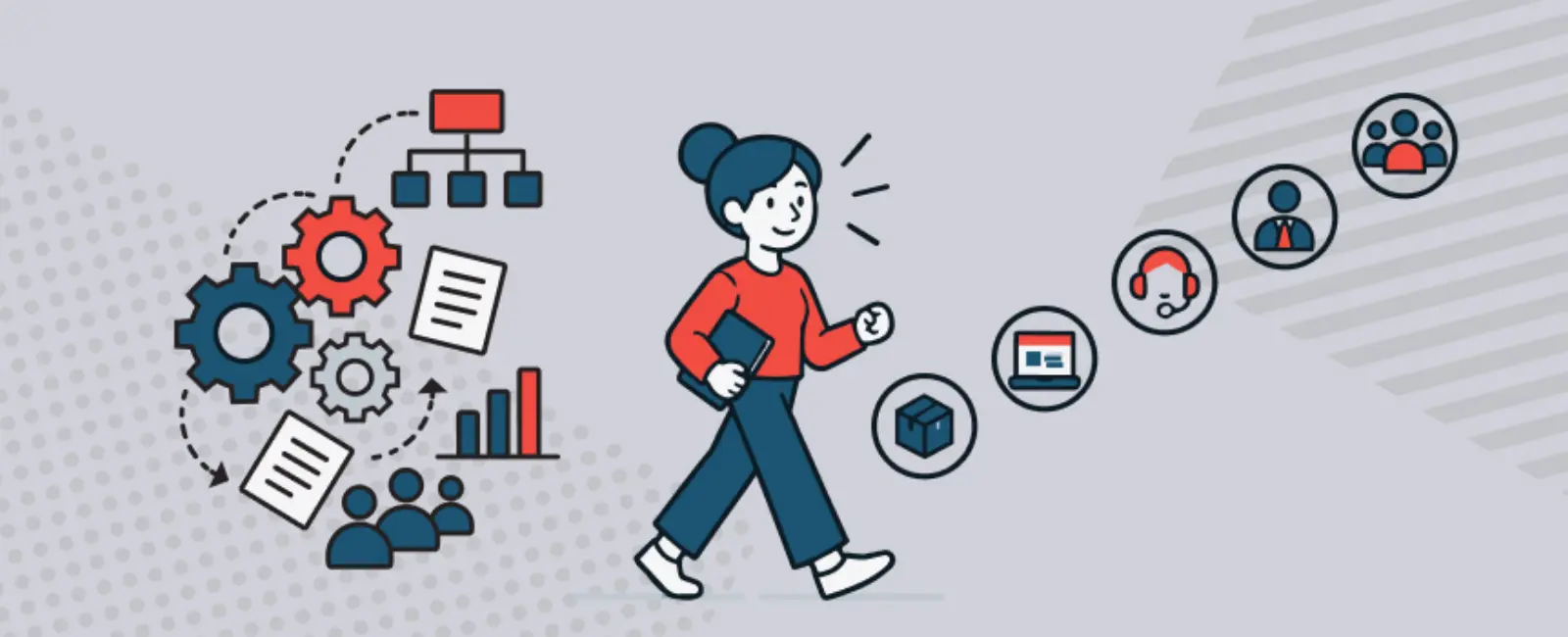
Acquisitions, divestitures, reorganizations, leadership changes and portfolio shifts can be strategic necessities for B2B and OEM organizations. They may strengthen competitiveness, simplify operations, expand capability or position the business for long-term growth.
But customers rarely experience change as a strategic business decision. They experience it through the brands, products, people, channels and interactions they rely on every day.
When those touchpoints shift without clear guidance, even positive transformation can create uncertainty:
- Who do I work with now?
- Is the product I depend on still available?
- Where do I go for support?
- Has the value I receive changed?
- Can I still trust this company?
Those questions may seem tactical, but collectively they influence something much bigger: customer confidence.
Your Customers Don’t See Your Org Chart
Internal teams may understand why a change is happening. They know the business case, the operating model and the intended outcome. Customers do not have that same context.
They do not see the org chart. They see the experience.
A sales territory realignment may make sense operationally, but customers may feel the disruption of losing a trusted contact. An acquisition may expand capability, but customers may wonder which brand, product or platform will continue. A portfolio shift may improve focus, but customers may question compatibility, availability or support. Even a new company name, website or service channel can create friction if customers are left to figure out what changed on their own.
Customers should not have to decode internal business change. If they have to piece together what it means, where to go or whom to contact, the organization has already introduced risk into the relationship.
Change Is Not an Announcement. It’s a Customer Journey.
One of the most common mistakes companies make is treating communication as a single moment. The announcement matters, but it is only the beginning.
Successful change communication starts by mapping the transition from the customer’s perspective.
- What do they need to know before, during and after the change?
- Where might confusion occur?
- Which relationships, processes or promises need to be reinforced?
Before the change, customers may need reassurance about continuity and a clear explanation of what is changing and why it matters to them. During the transition, they need practical guidance: contacts, timelines, product information, ordering processes, service channels and support paths. After the transition, communication should reinforce what has improved, resolve remaining uncertainty and demonstrate that promises made during the change have been kept.
The objective is not to communicate more. It is to remove uncertainty at every stage.
Every Touchpoint Has a Role
Clear messaging is essential, but clarity has to extend beyond the message. Customers experience change across multiple touchpoints, and each one needs to tell the same story.
That means aligning:
- Brand identity and architecture
- Product naming and portfolio structure
- Sales and channel communications
- Website navigation and digital experiences
- Customer service and technical support
- Sales enablement and partner materials
- Leadership messaging and internal talking points
If marketing says one thing, the sales team says another and the website suggests something different, customers lose confidence quickly. Consistency is not just a communications discipline. It is a customer experience requirement.
Different Customers Need Different Answers
Not every audience experiences the same business change in the same way.
A strategic account may care most about relationship continuity, supply assurance and executive alignment. A distributor may need detailed guidance on inventory, ordering, product names and channel programs. An engineer may be focused on specifications, compatibility and technical documentation. An end user may need reassurance that the product they trust is still available and supported.
Effective change communication identifies each audience, understands how the change affects them and provides the information most relevant to their experience.
Make Change Feel Intentional, Not Disruptive
Business transformation will always create questions. The goal is to answer those questions before customers are forced to ask them.
OEMs should pressure-test every major change through a customer lens:

Where could customers become confused?

Which products, services or relationships feel at risk?

What information does each audience need first?

Which touchpoints need to be updated together?

What should sales, service and channel teams say consistently?

How will we reinforce confidence after the transition?
Continuity is a customer benefit. When customers understand what is changing, what is staying the same and where to go next, they are more likely to stay engaged through the transition.
Successful change management is not measured only by whether the organization transforms. It is measured by whether customers can move through that transformation without losing confidence in the relationship, the value or the path forward.