


Do you have a favorite sports team? Only run in certain sneakers? Won’t use anything but a PC? The list could go on and includes a brand in almost any product category, from tech to tools. What these brands and others with near-obsessive devotion have tapped into is a basic human need to belong. And this goes beyond simply loyalty; it’s about forming a following around a brand. It is a group or community that identifies with a product or service, and its members share attitudes, values and beliefs about the brand. It’s like creating a unique subculture that reflects an entire lifestyle.
As marketers, achieving this kind of advocacy or even evangelism is the ultimate success. It’s not easy, and it doesn’t happen overnight, or by accident. It’s the result of a carefully crafted combination of precise, intentional strategies and tactics, highly targeted to deliver content that resonates in a very specific way with a very specific audience. It also means having the courage (and loyalty to yourself) to walk away from the idea of being all things to all people. This kind of brand success is achieved at the micro level, not the macro level. And it involves having a deep understanding of your target audience and creating a space, or spaces, where your brand identity, values and messaging can be reinforced to the point where others will advocate on your behalf.

Branding and Belonging
For the most part, this kind of brand success is typically only talked about in the context of consumer products, not in connection with B2B brands. At Crafted, we believe OEMs and B2B companies can achieve similar success by applying the same principles used by some of the most successful, globally recognized CPG brands. The psychological predisposition toward belonging already exists; the challenge is to create the brand identity and expose it to the right audiences through the right channels.
Old strategies that used to work aren’t enough anymore. The degree of media fragmentation and the number of channels available to prospects have exploded. Winning strategies always rely on both the medium and the message. Product performance, technical features, quality, customer service, etc., are still critical. But unless you can build a differentiated brand that occupies a higher-order position in the minds of your target audience, those things become less relevant simply because you may miss the opportunity to expose them to a potential customer.

Building Your Business by Building Brand Equity
So, the combination of differentiated content creation and highly targeted consumption is vital to any integrated marketing communications program. And it all goes back to where we started. Marketers need to forge emotional connections and build brand communities, and that begins with building a brand that, on a foundational level, inspires or confirms the unique beliefs, attitudes and values of a subset of buyers in your industry. Using your product or service is like a secret handshake or password that lets you get into a private club. Creating this kind of persona goes beyond the functional features and benefits of your product or service. It’s done through different types of content, imagery, engagement, events and promotional items. It’s how you show up and where you show up.
Think of the brand equity model developed by Kevin Lane Keller,1 Professor of Marketing at the Tuck School of Business at Dartmouth College, and a key component of his widely used textbook, “Strategic Brand Management.” Referred to as Keller's Brand Equity Model, or the Customer-Based Brand Equity Model (CBBE), it focuses on four key elements involved in creating a successful brand: brand identity, brand meaning, brand responses and brand relationships, along with six pillars that further support brand development, which are:2
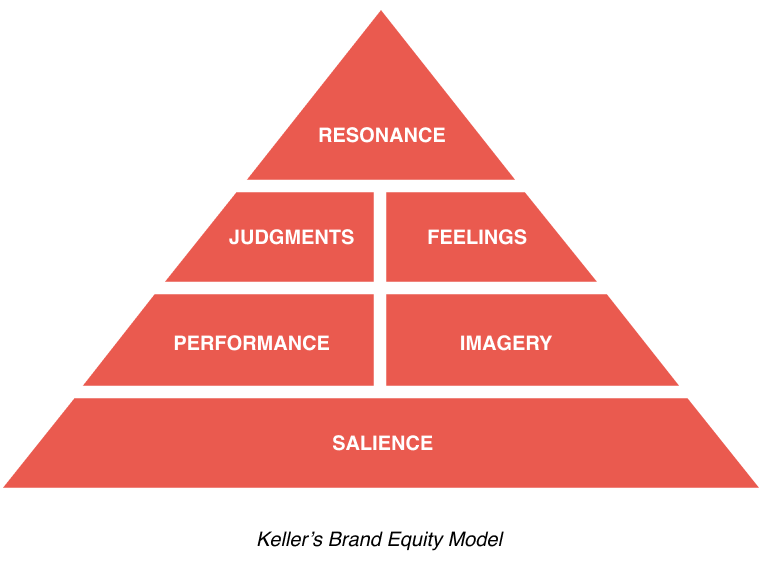
- Brand Salience: This involves finding your brand's true identity. What makes you, you?
- Brand Performance: You have to do the hard work to understand how customers believe your brand delivers on its promise.
- Brand Imagery: How does the visual presentation of your brand impact customer perceptions and beliefs?
- Brand Judgments: What do your customers really think? Time to find out.
- Brand Feelings: How do your customers respond when exposed to communications about your brand?
- Brand Resonance: How connected are you to your customers?
In the end, you can’t build a brand community without building a brand. That involves taking all the elements of Keller’s model to heart and combining them with a highly targeted, savvy media and customer engagement strategy, along with unique, highly engaging content. Together, these elements will help you build a brand that customers want to belong to. And that makes for a great hat that everyone will want.
REFERENCES
- Kevin Lane Keller, Tuck School of Business at Dartmouth College.
- BA Theories, “Keller’s Brand equity Model (CBBE Model),” March 16, 2022.