


In today’s industrial landscape, the OEM brands that win aren’t simply the ones with the best machines; they’re also the ones with the most connected, continuous and insight-driven marketing engines. Demand generation is no longer episodic, only tied to trade shows or the occasional product launch. Instead, today’s impactful OEM growth comes from building an always-on pipeline that uses data, automation and aligned teams to turn every digital interaction into measurable revenue.
In 2025, across our clients’ accounts, we saw a clear trend: Manufacturers who stay always-on see better results, lower costs and stronger pipelines.
Across our 2025 campaigns:
Always-on programs achieved conversion rates of
3.3%

beating the manufacturing average of 2.4%.
Cost-per-acquisition
(CPA) was
25-40%

lower than standard B2B benchmarks.
Brands that paused campaigns even for one month lost up to
18%
of pipeline momentum.
THE LESSON IS SIMPLE: You don’t need more marketing; you need connected marketing.
Today’s OEM Demand Engine: Four Systems Working Together
Most OEMs already have the right tools: customer relationship management (CRM), email, digital ads and sales teams. But real growth happens only when these tools work as a single system. Here’s the model successful OEMs follow today:
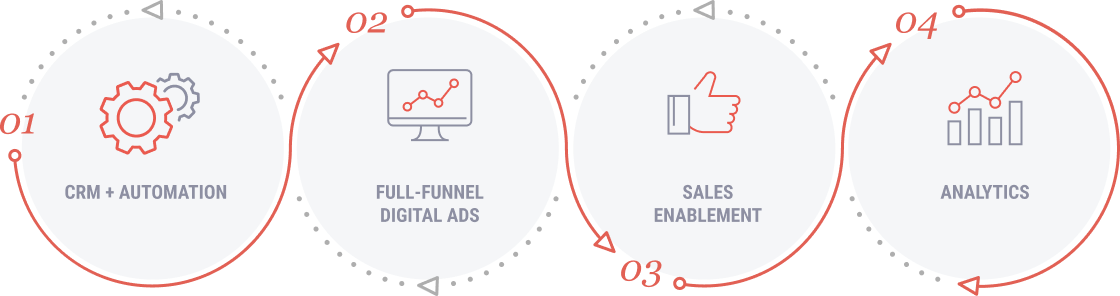
1. CRM + Automation: The Heart of the Pipeline
Connecting your CRM to your marketing tools, you can see exactly who is most likely to buy.
Insights from Crafted in 2025:
Finance, operations and
engineering combined to
lead conversions
59%
Segmenting ads by job
title or industry improved
click-through rates, by market
15-22%

Automated email
follow-ups increased
demo conversions by
18%
KEY TAKEAWAY: With the right setup, every lead gets personalized messages that feel relevant.
2. Full-Funnel Digital Ads: Build Demand Before Sales Engages
Brand Strategy + Demand Gen = JACKPOT
Industrial buyers conduct more research online than ever before, usually long before they talk to a salesperson. That means your ads need to run consistently, reaching the right people at the right time.
From our 2025 campaigns, Crafted learned that a full-funnel strategy drives both awareness and conversions. Here’s how:

Capture Demand: Google Search + Performance Max
- These campaigns drove over 70% of all form fills for OEM clients.
- Search ads averaged a 4.1% click-through rate, well above the manufacturing industry average of 2.45%.
- PMax campaigns efficiently reached buyers, showing strong purchase intent across multiple Google networks.

Generate Awareness: YouTube + Display
- Video and display campaigns expanded top-of-funnel reach, growing awareness traffic by 130% year over year.
- Outcomes matter. These channels performed best when the ads showed people benefiting from the product; for example, operators working safely, engineers solving problems faster or teams using machines to improve productivity.
- Ads that humanized the brand and highlighted real-world outcomes outperformed machine-only imagery by 25-40%, proving that buyers respond to human-centered storytelling.

Creative Refreshes and Audience Segmentation
- Regularly updating creative helps prevent ad fatigue in long-running campaigns.
- Segmenting audiences by job function, industry or company size improves click-through and engagement rates, helping you reach high-intent prospects efficiently.
KEY TAKEAWAY: A full-funnel, always-on digital approach ensures your brand stays visible from awareness to conversion while demonstrating how your solution directly benefits buyers and their teams.
3. Sales Enablement: Turn Interest Into Conversations
Our agency’s job isn’t complete once a lead clicks a link. The real impact happens when sales can engage the right person at the right time.
Data we collected across accounts in 2025 showed that OEMs who used account-based marketing (ABM) and CRM metrics turn casual interest into meaningful conversations by:
- Tracking which accounts viewed content, downloaded guides or watched product videos, empowering sales teams to reach out with context instead of cold calls.
- Targeting high-value accounts to help sales focus on leads that matter most, reducing wasted effort and improving efficiency.
- Using CRM data in LinkedIn ABM campaigns, allowing brands to reach the same decision-makers across channels, reinforcing messaging and increasing engagement.
This approach works because manufacturing buying decisions often involve multiple stakeholders, including engineering, finance, procurement and operations. When sales know who is interacting with content, they can have timely, relevant conversations that move the pipeline forward.
In addition, uploading CRM lists to LinkedIn and Google led to:
40%
higher targeting accuracy
22%
higher CTR when targeting
high-value accounts
30%

reduction in wasted spend
KEY TAKEAWAY: Combining marketing insights, CRM data and ABM tactics helps ensure that every interaction has a higher chance of becoming a real opportunity.
4. Analytics: Make Everything Smarter
Always-on marketing wins because it learns from every click.
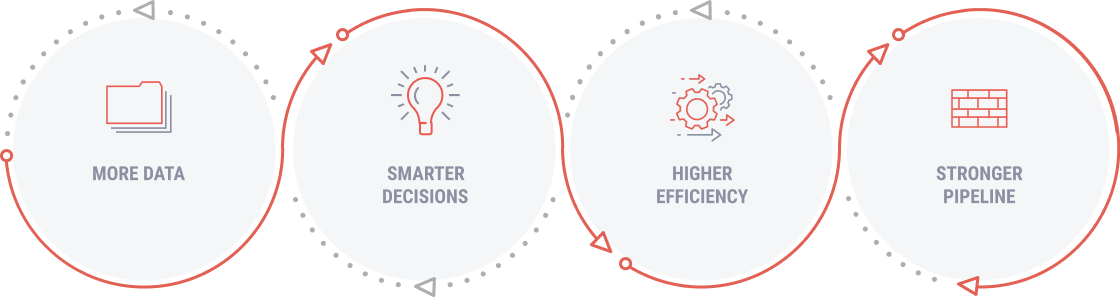
Website Performance: Paid traffic grew by 130%, but bounce rates help identify pages that will benefit from better CTAs and clear next steps.
Cost Efficiency: Smarter keyword strategies cut cost-per-clicks by 10% to 18%.
Channel Quality:
- LinkedIn delivers decision-makers.
- Search provided the most conversions.
- YouTube drove the newest awareness at the lowest cost.
KEY TAKEAWAY: A balanced mix creates a full, healthy pipeline.
The Future of OEM Growth Is Always-On Creative That Still Humanizes the Brand
Technology continues to transform the way we work, compete and grow. However, in 2025, the strongest-performing OEM ads centralized people and the outcomes that impact their work and their lives. By showing real people using tools to solve problems, work more safely and be more productive, we can connect with buyers on a deeper, more impactful level.
As the industrial world becomes more digital, visibility and trust no longer start with a handshake — they begin with data, intelligence and timely engagement. OEMs that build an interconnected, insight-driven demand engine will position themselves not just to compete, but also to lead their category.
Turning data into demand is more than a marketing tactic. It’s a growth strategy that advances your brand, strengthens your partnerships, and fuels the kind of innovation that betters everyday life.